A rechargeable emergency lantern is a small, daily-cycled energy system. By day a photovoltaic panel charges the battery through a simple charge manager; by dusk the same battery feeds a constant-current LED driver across several brightness modes, sometimes with a USB port topping up a mobile phone. Unlike a fixed emergency luminaire that floats for years, a portable solar lantern is deeply cycled every single night, which reframes the battery question from standby life to cycle life, charge acceptance and usable energy per gram of safe chemistry.
The reference framework for off-grid pico-solar lighting is the IEC 62257 series, in particular IEC TS 62257-9-5 for the selection and comparative testing of portable PV lanterns and solar-home kits, and IEC TS 62257-9-8 for the quality requirements. Independent programmes such as Lighting Global and VeraSol (and humanitarian buyers such as UNHCR) test to these methods, publishing verified lumen output, run-time and battery performance rather than marketing claims.
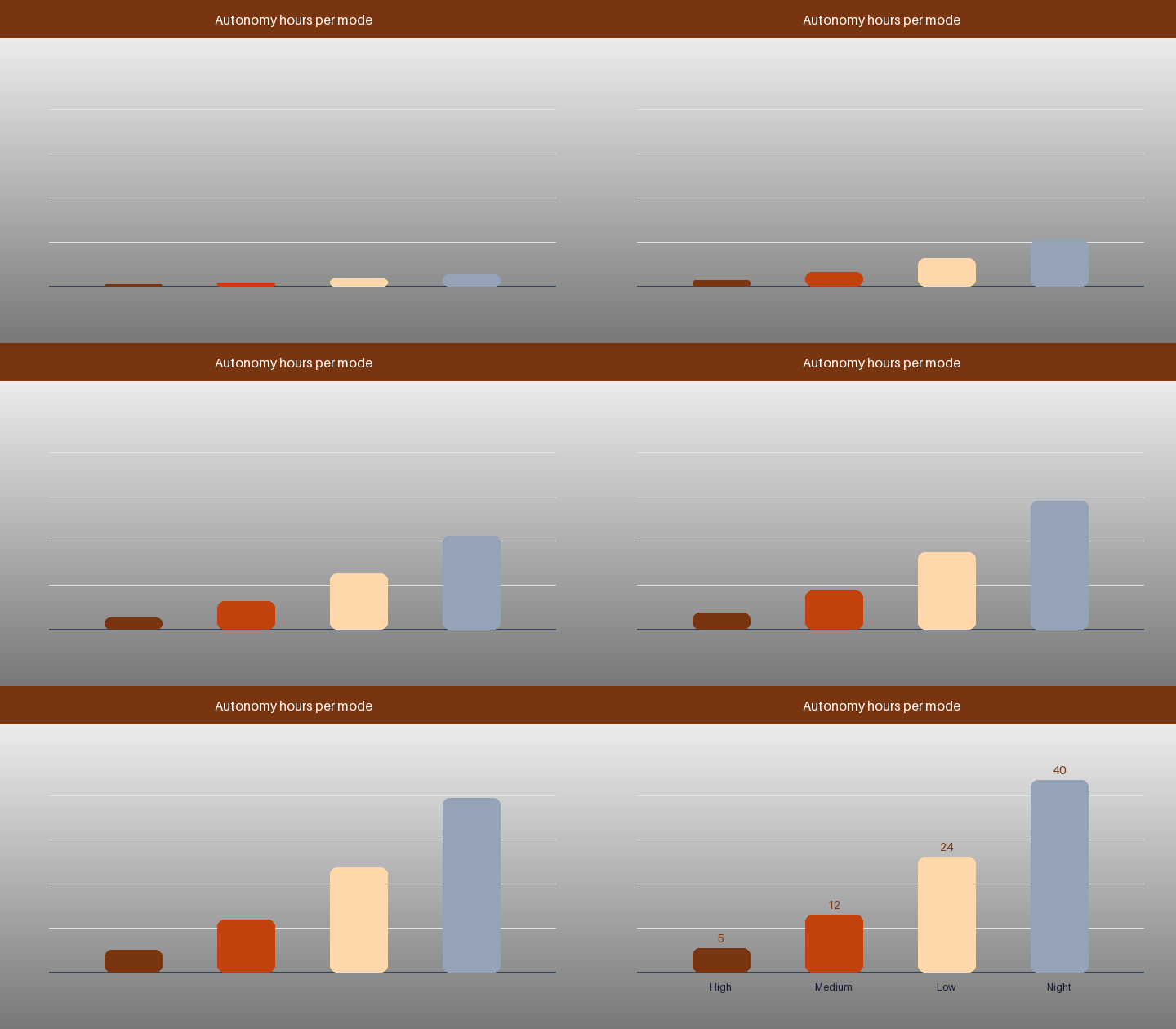
Procurement specifications are revealing about the electrical contract. A representative UNHCR multi-purpose solar lantern specification asks for a rechargeable battery adequate for at least 500 lumen-hours, at least five hours of light at the highest setting and at least twelve hours at the lowest, battery charging efficiency of at least 90%, and a battery the end user can replace. Those numbers translate directly into a battery energy and cycling requirement.
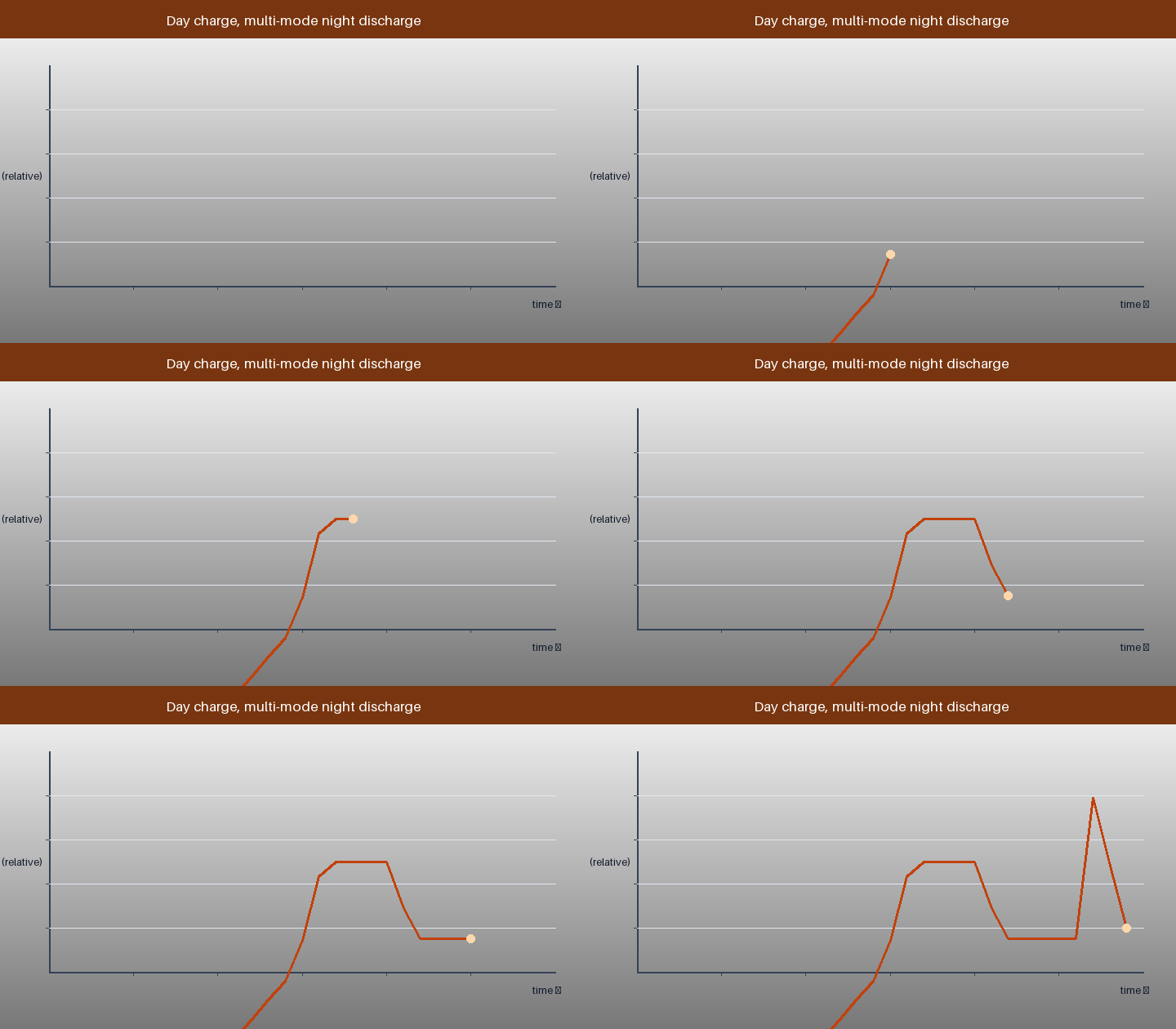
The first animated figure traces a 24-hour current profile. Through the daylight charge window the panel delivers a sun-dependent charge current - strong around noon, weak under cloud - that the charge manager must accept without overcharging. At dusk the load appears: a high-brightness mode for the first active hours, a long low-brightness or night-light tail, occasional short high-current pulses for a USB phone charge, and then a morning recharge. Unlike standby backup products, the lantern's battery sees a substantial depth of discharge every night and a full or partial recharge every day, 300-500 cycles a year.
This makes charge acceptance at modest panel current, resistance to repeated partial charging, and recovery from an occasional deep discharge the attributes that determine whether the lantern still meets its five-hour high-mode promise after two years.
LED efficacy converts light demand to electrical energy in a clean chain: required lumen-hours divided by lumens per wall-watt gives LED electrical watt-hours, which divided by driver efficiency and nominal pack voltage gives ampere-hours. A lantern delivering 500 lumen-hours at an effective 100 lm/W needs roughly 5 Wh of light, and after driver and battery losses the pack must store noticeably more.
The second figure shows how one fixed NiMH pack splits its stored energy across brightness modes: the same cells that deliver five hours at full brightness can sustain a low night-light mode for many more hours. Designing the mode ladder so that the guaranteed high-mode runtime always survives, even after an overcast recharge day, is the core energy-budget discipline.
Solar charging is weather-limited. A lantern sized for one clear night fails in the field's real condition - two or three consecutive weak-charge days. Robust products build in autonomy reserve and a charge manager that prioritises a safe state of charge, while the battery must tolerate being left partially charged and then recharged without the memory-like behaviour or steep capacity loss that older nickel chemistries showed.
Modern low-self-discharge, pre-charged NiMH is well matched here: it accepts opportunistic charging from a small panel, tolerates shallow and partial cycles, and - being an aqueous chemistry with no flammable organic electrolyte - does not carry the thermal-runaway exposure of lithium in a device that sits on a kitchen table, in a tent or beside a sleeping child.
Many emergency and solar lanterns double as a power bank, adding a USB 5 V output that can draw an ampere or more for tens of minutes. That pulse is large relative to the LED load and changes the pack specification: cells need a credible high-rate capability, the pack needs low series resistance, and the boost converter needs a battery that holds voltage under the USB pulse rather than collapsing to undervoltage.
NiMH D, Sub-C or A-size cells welded into a pack deliver that pulse repeatedly across thousands of cycles, and their flat 1.2 V plateau keeps the boost input stable through most of the discharge - an advantage for a low-cost, robust design without a complex battery-management system.
The engineering brief for a lantern battery therefore reads very differently from a standby battery: optimise for daily cycle life and charge acceptance, guarantee the high-mode runtime after weak-charge days, support a USB pulse, stay safe in a consumer enclosure, and allow user replacement. The next paper turns this profile into a chemistry choice and a step-by-step pack sizing, and the third maps the result onto the IEC 62257 test and certification trail.
Weijiang Power builds sealed nickel-metal hydride cells and custom rechargeable packs for home emergency lanterns, solar pico-lighting and preparedness products that must survive years of daily charge-discharge use. Share your lumen-hour target, brightness modes, solar-charge window, phone-charging requirement and temperature range and our engineers will size a cycle-robust, aqueous-safe NiMH pack with welded tabs and the connector your assembly needs. Review cell options and pack formats on the products page.


